How to Choose a Baseball Bat
READ OUR BASEBALL GUIDE
BASEBALL LEAGUES
BBCOR
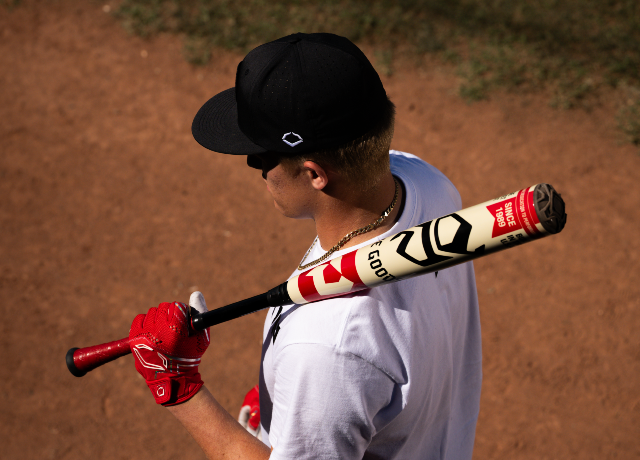
-Maximum drop weight of -3
-Maximum barrel diameter of 2 5⁄8”
-Most wood bats are allowed under BBCOR rules

SIZING
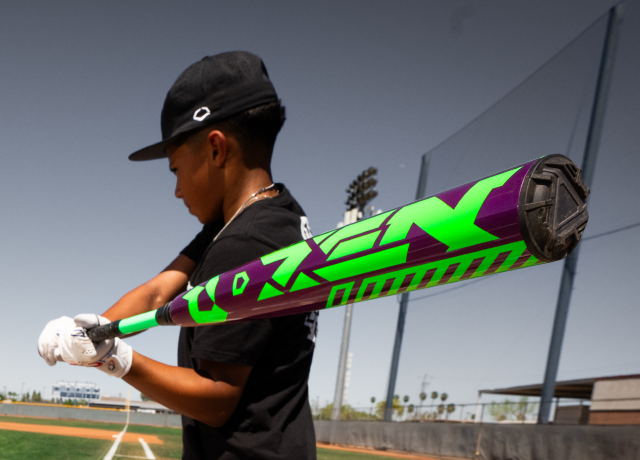
Success at the plate often comes down to this: making consistent hard contact against live pitching. To do this, it’s important to swing the right bat for you. That means a bat that’s long enough to cover the strike zone, light enough to swing with ease, heavy enough to generate power, and, of course, permitted in your league.
In order to find the ideal size for you, consider the following guidelines.
*According to USSSA rules, players 13U must swing -8 or heavier and 14U must swing -8.
LENGTH, WEIGHT, WEIGHT DROP – AND WHY THEY MATTER
Many baseball players believe a longer bat means better plate coverage – but that’s not always the case. A longer bat is often swings heavier, and if it’s too long for you, can reduce your swing speed and keep you from catching up to certain pitches. Even some professional players swing bats as short as 32”. When choosing your bat length, keep plate coverage in mind – but also consider your swing and stance, as well.
LENGTH
Bat length is measured in inches from knob to end cap. A longer bat gives you greater reach, allowing you to hit balls on the outside part of the plate. However, longer bats also tend to have more mass towards the end of the bat that requires more power to swing them. We recommend swinging bats of different lengths to decide what option best suits your swing. The right combination of length and weight will help you reach your peak performance.
Baseball bats most commonly are found between 24-34 inches. Please check the size chart for examples of what length may be appropriate for you.
WEIGHT DROP
BAT LENGTH (IN.) – BAT WEIGHT (OZ.) = WEIGHT DROP
Bat weight is measured in ounces (oz.). A bat’s weight is often tied to its “weight drop” -- its length in inches versus its weight in ounces. For instance, a 30-inch, 20-ounce bat would be referred to as a -10 bat. As a general rule of thumb, the higher the competition or league level (meaning, from youth league up to the pros) the lesser the weight drop. A lesser weight drop means the bat feels heavier. So a -5 bat will feel heavier than a -10 bat.
Selecting the right bat weight depends on three main factors: sport, league rules, and player preference. Be sure to check with your local league for guidance, and read onto the league information listed below for more information of the three major league categories: BBCOR, USSSA and USA Baseball
Most common weight drops in various baseball leagues are -12, -10, -9, -8, -5, and -3. As you progress toward high school baseball, the weight drop lowers (the bats become heavier). When moving to a heavier bat, you may then decide to drop an inch in length to more easily handle the additional weight. This is a matter of personal preference and comfort at the plate as you advance in age, league and skill level.
SWING WEIGHT
A factor you may not see, but will definitely feel is the swing weight* of your bat. Bats are often segmented by their given length and weight. The swing weight is a determination of how a bat’s particular weight is distributed along the bat’s length. For example, you can have two bats that are 30 ounces, but that have different swing weights because the 30 ounces are distributed differently in the bat. Bats can fall along the swing weight spectrum, from light to balanced to end-loaded.
End-loaded bats shift extra weight toward the end of the barrel, creating more whip-like action on a player’s swing and generating more power.
Balanced bats have a more even weight distribution, allowing for potentially greater swing speed for many hitters. This is preferred by contact hitters who want more control of their swing.
*Note - there are a variety of swing weights offered to meet player needs.
BAT TECHNOLOGY
What goes into a bat?
A baseball bat is more than just a hunk of metal or wood. It is a carefully engineered tool that allows players to get the most out of every swing. Each component of the bat, from knob to end cap, is designed to maximize every ounce of performance. There are four main tech components you should understand when it comes to bats: material, barrel diameter, construction and weight balance.
BAT COMPONENTS
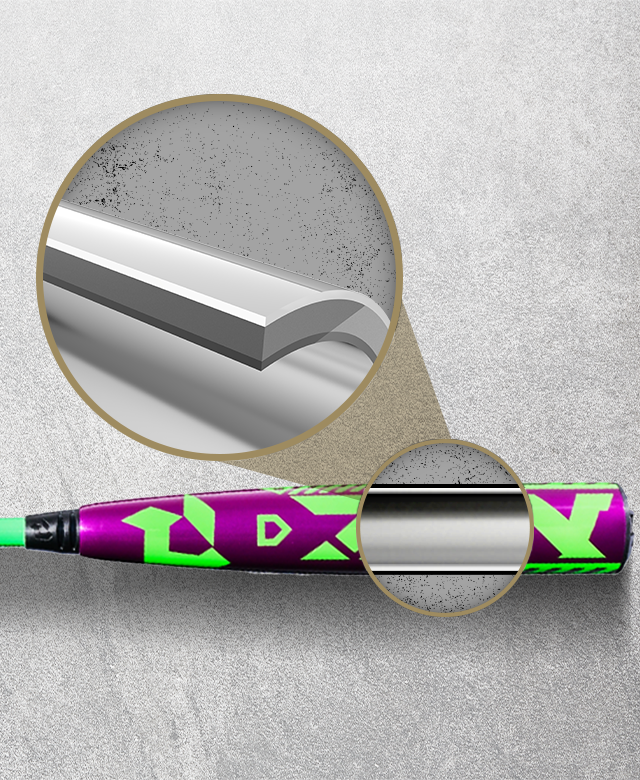
Material: Composite
Composite bats are made with a layered material (often carbon fiber) that is easy to distribute, giving us the ability to make bats with a variety of swing weights, from balanced to end-loaded.
Pros of Composite:
-Minimize the sting from a mis-hit ball by reducing vibration to the hands
-Often have a larger sweet spot than alloy bats
Material: Alloy
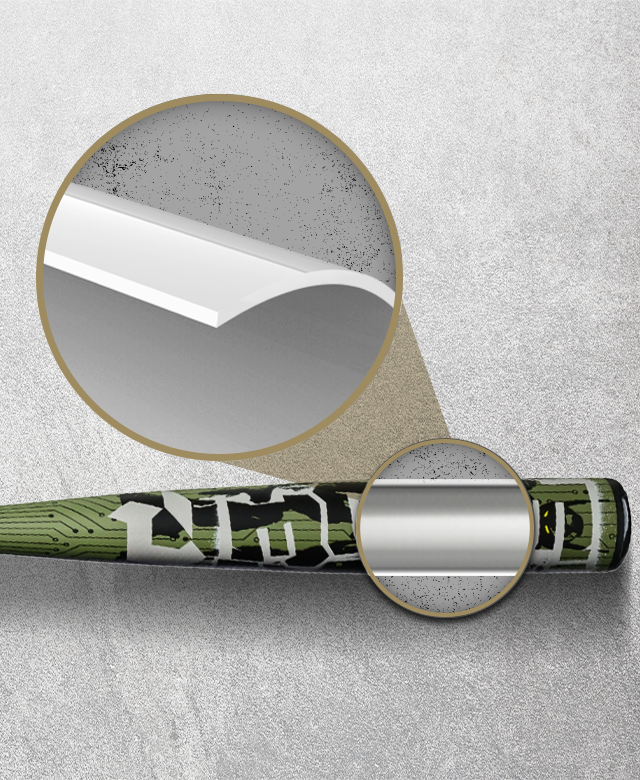
Alloy is a mixture of two or more metals, and has been commonly used in baseball bats for years.
Pros of Alloy:
-Stiffer feel through the swing zone
-More durable material
Construction
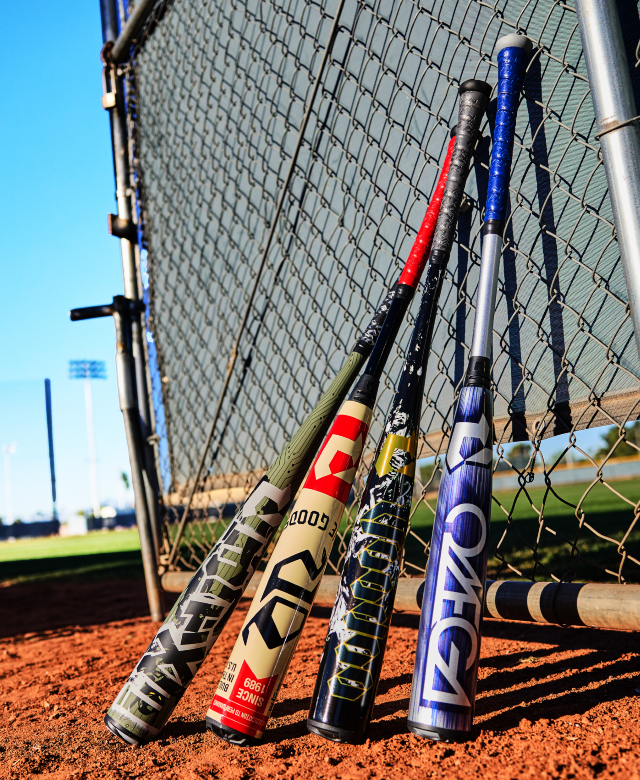
DeMarini offers two types of Baseball bats – one-piece and two-piece. A one piece bat is at sounds – the handle and barrel consist of one-piece of material. DeMarini offers a number of One-Piece alloy bats such as the Voodoo One and The Goods One. One-piece bats swing stiffer and will be less-forgiving on mishit balls.

Barrel Diameter
The barrel is the thickest and widest part of the bat used to hit the ball. The barrel is where you want to hit the ball in order to achieve maximum performance. these are the most common barrel diameters:
-2 3⁄4 inches
-2 5⁄8 inches
-2 1⁄2 inches
Wood Composite
These bats differ from other wood bats, since they are multiple combinations of materials -- rather than one natural piece of wood -- with the goal of increased durability with wood-like performance. While wood composites are less susceptible to breakage, they also require league approval for use. So before buying a wood composite bat, make sure it is approved for play in your league.
*Wood bats are more likely to break or crack on mishits than Alloy and Composite bats